
Andy Burnham's Four Geopolitical Tests
Iran, Trump, Russia and China will reveal whether his government can rebuild Britain’s energy, defence and technological power

Hello and welcome back to States of Play, the newsletter exploring how the world is changing - from geopolitics to technology, from defence to demographics.
This week, Britain has a new prime minister - again. Such is the pace of geopolitical change that the world Andy Burnham inherits is already markedly different from the one Keir Starmer faced when he entered Downing Street only a couple of years ago.
The good news is that there is now, perhaps, a growing recognition across the political class that foreign and domestic policy can no longer be neatly separated. Voters understandably prefer governments to concentrate on prices, housing, public services and jobs. Yet the experience of the past few years has shown that wars, energy shocks, supply-chain disruption and the decisions of foreign powers can shape all of those things. What happens abroad increasingly determines what governments can deliver at home.
Burnham appears to be making some intelligent early choices. But the geopolitical challenges he faces may prove among the most difficult of his premiership. In this week’s States of Play, I want to examine the four that matter most: Iran, Donald Trump, Russia, and China, and what they reveal about the need to rebuild Britain’s energy, defence, and technological power.
Many thanks for reading.
Sam
Andy Burnham has built his political career around the idea that government should improve the things people encounter every day: transport, housing, public services, jobs and the infrastructure that holds communities together. As prime minister, his success may depend as much on events in Tehran and Washington as on anything he does in Manchester or Westminster. War in the Middle East could raise energy prices again. Donald Trump could further damage the Atlantic alliance. Russia could raise the stakes in its ongoing hybrid war with Europe. China could expose the extent of Britain’s technological dependence, and perhaps move on Taiwan.
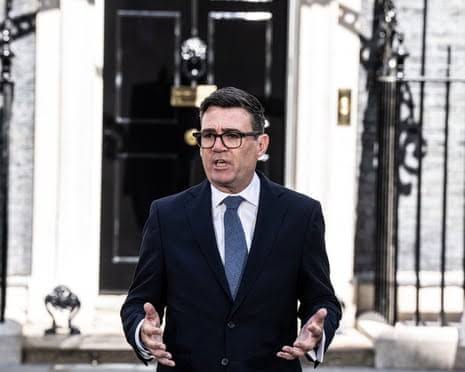
These are not four unrelated crises - each reveals a different form of British weakness. Iran exposes vulnerability to external energy shocks. Trump exposes dependence on American military power. Russia exposes the fragility of Britain’s defence and national resilience. China exposes technological and industrial dependence. Burnham’s task is therefore not simply to respond to events abroad, but to rebuild Britain’s ability to withstand and shape them.
The war in Iran is the most immediate test. Britain has already experienced how rapidly international energy shocks can become domestic political crises. Wholesale gas prices surged after Russia’s invasion of Ukraine, contributing to a 54 per cent increase in the household energy price cap in April 2022 and forcing the government to spend heavily to prevent bills rising still further. Prices subsequently fell, but they have remained volatile and rose by another 13 per cent in July 2026. The experience has helped make energy one of the central drivers of Britain’s continuing cost-of-living crisis.
Burnham’s real geopolitical test is whether he can make Britain harder to coerce and better able to absorb shocks
Any escalation around the Gulf or the Strait of Hormuz could therefore raise oil and gas prices, increase shipping and insurance costs and push inflation higher once again. For Burnham, this would quickly cease to be a distant foreign-policy problem. It would appear in household bills, petrol prices, transport costs and the wider pressure on living standards, striking directly at his promise to give people relief from the cost of living. It would also reduce the money available for public services and
