
Architectures of Intelligence: How AI Is Reshaping Global Power
China’s Integration Strategy and America’s Frontier Bet

Hello and welcome back to States of Play – the newsletter and podcast decoding the way the world is changing, from great-power rivalry to technological upheaval, defence strategies to demographic shifts.
In today’s essay, we are taking a short break from our series on the history of the world order to turn directly to technology and geopolitics. The timing is not accidental. In recent weeks, UK Research and Innovation (UKRI) has launched its new AI investment strategy, setting out Britain’s priorities for research, talent and adoption. At the same time, the Tony Blair Institute for Global Change has published a significant paper examining China’s forthcoming Fifteenth Five-Year Plan - and the way Beijing’s AI ambitions diverge from the American model.
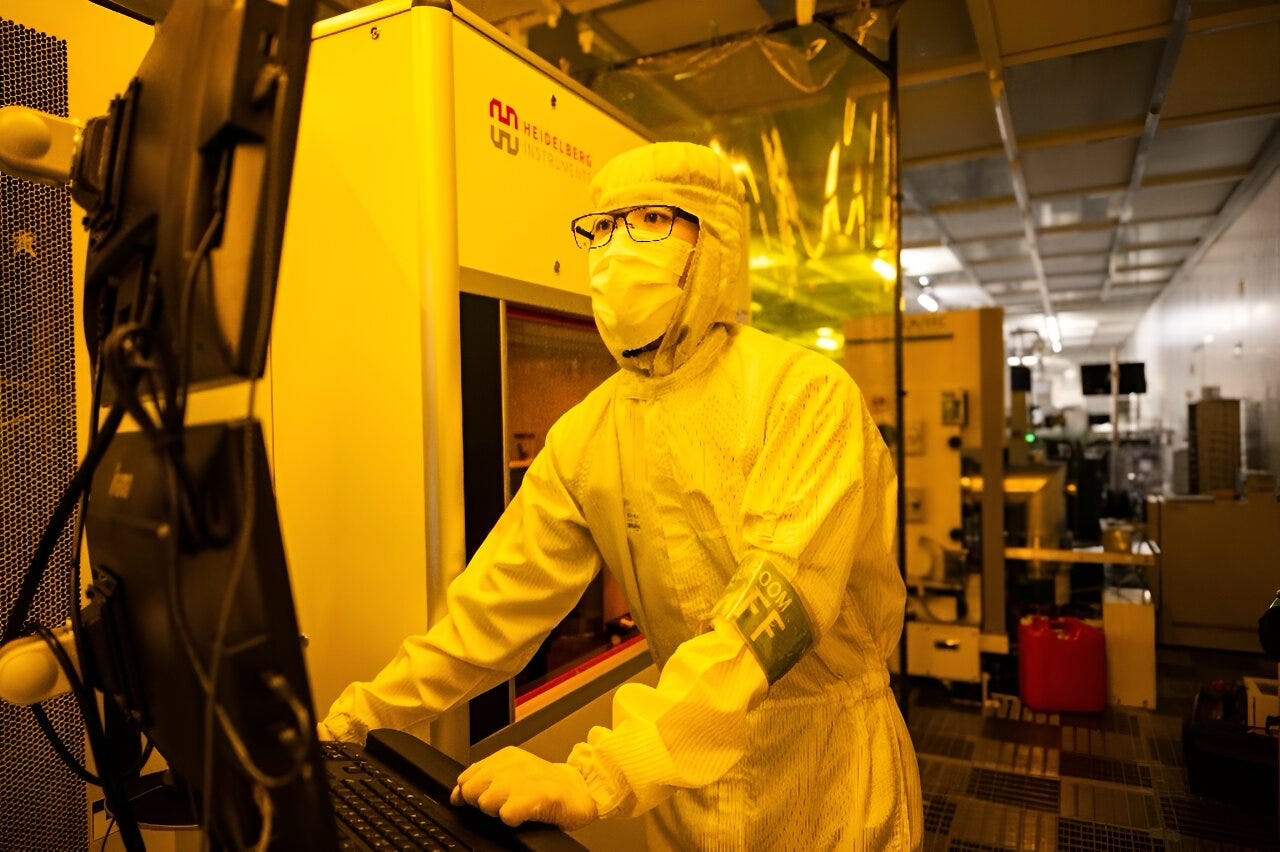
Technology now sits at the centre of both domestic transformation and international competition. Artificial intelligence is reshaping productivity, security and state power. Understanding how different political systems approach AI is therefore not a technical exercise, but a geopolitical one - and that is what this mini-series will explore.
Many thanks for reading.
Sam
Technology as Power: China’s Bid to Win the Fourth Industrial Revolution
Technology is no longer an auxiliary factor in geopolitics; it is the central variable. Power in the twenty-first century turns less on territory than on control over computation, production systems and supply chains. Artificial intelligence sits at the heart of that shift. The emerging contest is not simply about innovation in laboratories. It is about which state can reorganise its entire economy around intelligent systems.
If China’s ambition can be distilled into a single objective, it is this: to win the Fourth Industrial Revolution. By that I mean the integration of artificial intelligence, advanced robotics, autonomous systems and digital infrastructure directly into the fabric of industrial production. Unlike the information revolution, which digitised communication and services, this phase embeds intelligence into physical systems - factories, ports, rail networks and energy grids. It transforms how value is produced.
It is in this context that the Tony Blair Institute’s recent assessment of China’s forthcoming Fifteenth Five-Year Plan is significant. The Institute identifies a decisive shift: Beijing is moving from technological development to technological diffusion. AI and robotics are no longer treated as frontier sectors to be cultivated. They are to be deployed system-wide across the productive economy. Industrial depth and supply-chain resilience are not peripheral concerns; they are the strategic core.
In an age where technology defines power, China’s wager on AI - if successful - would alter not only economic hierarchies but the structure of global competition itself
This reflects doctrine rather than incremental policy adjustment. Xi Jinping has repeatedly described science and technology as the “main battlefield of international strategic competition.” Within the framework of 新质生产力 - “new quality productive forces” - artificial intelligence is conceived as infrastructure. It is the operating system of a re-engineered industrial order designed to replace labour-intensive growth with innovation-led productivity anchored in advanced manufacturing and digital integration.
The plausibility of this strategy rests on scale. China accounts for roughly 30 per cent of global manufacturing value added - more than the United States, Japan and the United Kingdom combined. Manufacturing comprises over a quarter of Chinese GDP,
