
The Polycrisis Has Begun
Our updated Polycrisis 2027 report argues that the era of converging crises is no longer a future scenario but an emerging reality

Hello and welcome back to States of Play – the newsletter and podcast decoding the way the world is changing, from great-power rivalry to technological upheaval, defence strategies to demographic shifts.
In November 2025, my colleagues at Sibylline and I published Polycrisis 2027, a paper exploring the possibility that the world was entering a period in which multiple geopolitical, economic, technological and security shocks would begin to converge.
The central argument was that the greatest danger facing the international system was not any single crisis, however serious, but the interaction between several crises occurring simultaneously. A confrontation over Taiwan, renewed Russian pressure on Europe, instability in the Middle East, technological rivalry and domestic political fragmentation in the West might each be manageable in isolation. Combined, however, they could create a systemic shock far greater than the sum of their individual parts.
We have now published an updated version of that report. As we argue, events over the past six months (not least the war in Iran, and the continued breakdown in the relationbship between the US and its allies) have strengthened rather than weakened our original thesis.
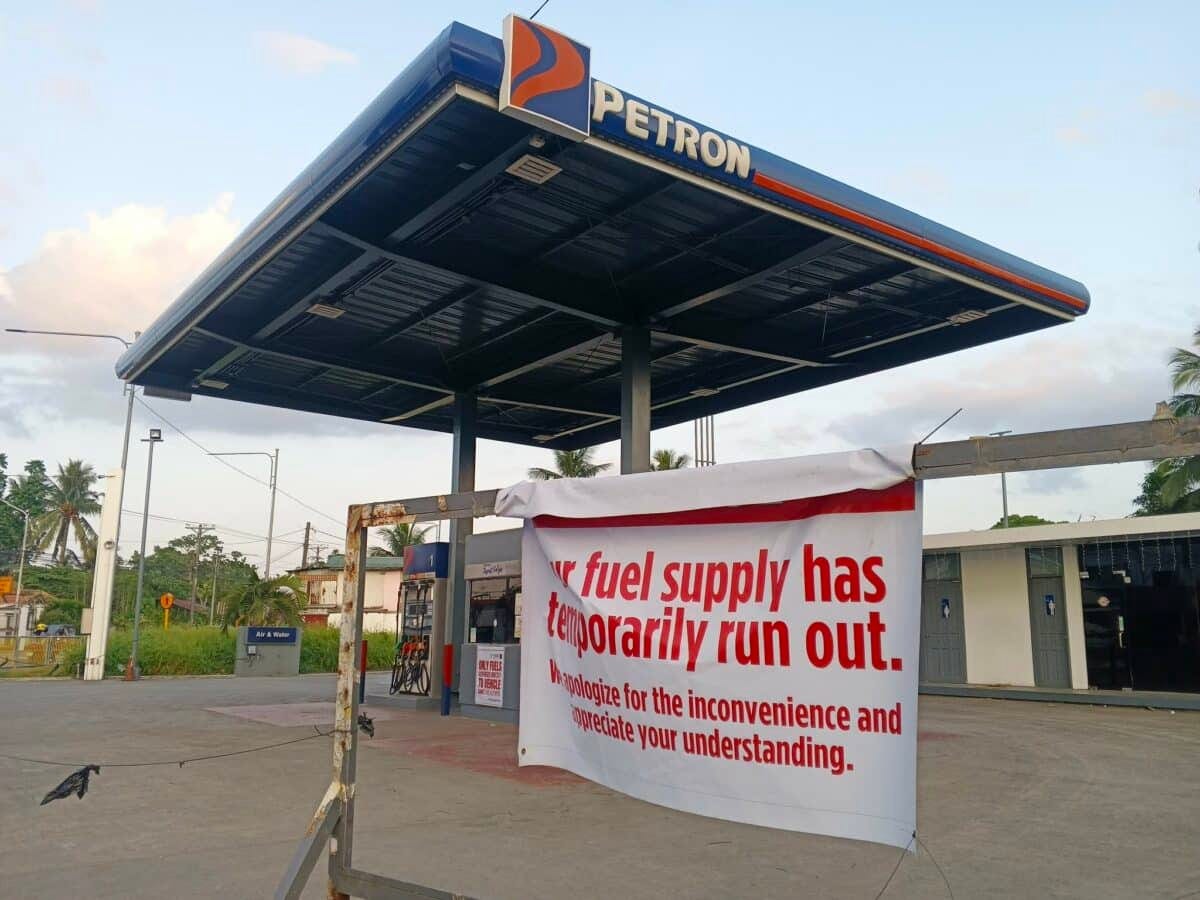
Indeed, it is increasingly clear to us that the polycrisis is no longer a theoretical future scenario but a process that is already underway. The recent war involving Iran has demonstrated how quickly a regional conflict can reverberate through energy markets, supply chains, military planning and alliance politics.
In today’s States of Play essay, I want to explore the key arguments of the updated report, why we believe the period between now and 2027 could prove unusually dangerous, and why the real risk facing the West is not a single geopolitical shock, but the convergence of several at once.
Many thanks for reading.
Sam
If you would like to receive the full updated Polycrisis report click here
When Crises Converge
What if the war between the US and Iran had happened simultaneously with a Taiwan blockade and a Russian challenge to NATO?
At first glance, this sounds like the sort of nightmare scenario that strategists devise for military exercises rather than something likely to occur in the real world. Yet history suggests that periods of great international instability are rarely characterised by neat, sequential crises. More often, they are defined by the convergence of multiple pressures that reinforce one another.
The First World War was not caused simply by the assassination of Archduke Franz Ferdinand in Sarajevo. The assassination mattered because it occurred within a system already loaded with geopolitical explosives: alliance commitments, naval arms races, imperial rivalries, nationalist movements and domestic political tensions. Europe did not stumble into war because of a single event. It entered war because several structural pressures collided at precisely the same moment.
For much of the post-Cold War period, Western governments became accustomed to a remarkably benign strategic environment. The United States possessed such overwhelming military, economic and political dominance that it could absorb multiple shocks simultaneously without fundamentally threatening the stability of the international system. Consider 2008. America was fighting major wars in both Iraq and Afghanistan at the very moment the global financial system was experiencing its most severe crisis since the Great Depression. Yet despite the enormous costs involved, both the wars and the financial crisis unfolded against the backdrop of a world order still dominated by a single superpower. There were crises, certainly, but there remained an underlying confidence that the system itself would hold.
More importantly, these shocks remained relatively compartmentalised. The Global Financial Crisis spread rapidly through banks, markets and economies, but it did not directly affect maritime trade routes, energy flows, semiconductor production or military supply chains.
Equally, the War on Terror consumed vast resources and shaped Western foreign policy for two decades, but it did not fundamentally disrupt the functioning of the global economy. With the exception of the tragic but comparatively limited effects of jihadist radicalisation and terrorism, events in Afghanistan or Iraq did not cascade through every corner of the international system.
The significance of the Iran war lies not in what it tells us about Iran, but in what it reveals about the vulnerability of the international system
Today’s world looks increasingly different. Economic, technological and geopolitical systems are now so deeply interconnected that a crisis in one domain can rapidly generate consequences across many others. That is what makes the present moment potentially more dangerous than anything seen since the end of the Cold War.
The war in Iran offers an example into how different the world now is. A conflict centred in the Middle East quickly affected global energy markets, shipping routes, inflation expectations, military stockpiles and alliance politics. Governments thousands of miles from the battlefield – from Canberra to Manila to Buenos Aires - suddenly found themselves dealing with the consequences. The significance of the conflict lies not simply in what happened, but in what it revealed. It demonstrated how interconnected the modern international system has become after three decades of uber globalisation, and how quickly disruption can spread through it.
The most important question arising from the Iran war is therefore not what happens next in Iran. It is what happens if a crisis of this magnitude coincides with other major events. What happens if China imposes a quarantine on Taiwan while instability continues in the Middle East? What happens if Russia simultaneously tests NATO’s resolve along its eastern flank? What happens if all of this unfolds amid intensifying competition over artificial intelligence, semiconductors and critical minerals?
This is the central thesis of Polycrisis 2027, a paper we first published in November last year and have now updated following the events of recent months. The argument is that the gravest threats to international stability rarely emerge from a single dramatic event. More often, they arise when several seemingly distinct crises collide. The danger is not Iran. Nor is it Taiwan, Russia, artificial intelligence or political polarisation taken in isolation. The danger is that these forces begin to interact, creating a chain reaction whose cumulative effects are far greater than the sum of their individual parts. History suggests that periods of greatest instability are usually characterised not by one crisis, but by several arriving at once.
Why the World Is Entering a Dangerous Convergence
The reason the second half of the 2020s appears increasingly dangerous is not that any single trend is unprecedented. Rather, it is that several important trends are beginning to align in time.
The United States remains the world’s most powerful nation, but it is no longer operating under the unusually favourable conditions that characterised the first decades after the Cold War. Political polarisation has deepened steadily, trust in institutions has eroded, and the prospect of the 2026 midterm elections is more likely to intensify domestic tensions than alleviate them.
None of this means that America is in decline in the crude sense often suggested by its rivals. By almost every conventional measure it remains the dominant military power, the centre of the global financial system, and the world’s leading technological innovator. Yet even great powers are constrained by politics, and America’s ability to convert its vast resources into coherent strategic action appears increasingly challenged by domestic division.
At the same time, Washington faces a geopolitical landscape that is becoming progressively more demanding. The Middle East continues to consume military attention and resources. Europe requires reassurance as Russia rebuilds its military strength and probes Western cohesion. Across the Pacific, the challenge posed by China remains the defining strategic question of the century.
During the unipolar moment, the United States could comfortably manage multiple crises simultaneously because there was no serious competitor capable of exploiting distraction elsewhere. Today the situation is rather different. American power remains immense, but so too is the number of demands being placed upon it. The question is no longer whether the United States possesses sufficient strength, but whether it can sustain that strength across several theatres at the same time should multiple crises emerge concurrently.
China faces a different, though no less significant, set of challenges. After four decades of extraordinary expansion, the economy appears to be entering a more difficult phase. The property boom that helped drive China’s rise has gone sharply into reverse, with house prices falling substantially (around 40%) from their 2021 peak and the financial position of many local governments deteriorating alongside it.
Constrained by falling property-based wealth, consumption has proved weaker than policymakers hoped, while an increasingly uncertain global trading environment is making it harder to rely on exports alone as an engine of growth. None of this should be mistaken for impending collapse. Predictions of China’s imminent downfall have repeatedly been shown to be premature. China remains one of the most formidable economic and military powers in the world, with enormous reserves of state capacity and political control.
Yet the slowdown matters because the Chinese Communist Party has derived much of its legitimacy not from democratic consent but from delivery: rising living standards, economic progress and the promise of national rejuvenation after what Beijing still remembers, rightly or wrongly, as the Century of Humiliation. For much of the reform era, prosperity helped answer difficult political questions. As growth becomes harder to sustain, however, questions of national strength, strategic competition and China’s place in the world inevitably assume greater significance. Throughout history, states facing mounting economic pressures at home have often become more sensitive, not less, to questions of prestige, security and national purpose abroad. China may prove no exception.
Europe’s difficulties are different again. The continent has awakened to the reality that the era of the post-Cold War peace dividend is over and that military power once more matters. Defence spending is rising across much of Europe and governments are attempting to rebuild capabilities that were allowed to atrophy over decades. Yet rearmament takes time, particularly after years of underinvestment, and it is occurring against a backdrop of sluggish economic growth, fiscal pressures and increasingly fragmented politics.
At the same time, questions that many Europeans assumed had been settled are once again being asked. How much can Europe rely on the United States? Can the continent defend itself if American attention is drawn elsewhere? The result is a Europe that recognises the strategic dangers around it but is still struggling to adapt to them at the necessary speed.
Beyond Europe, the Middle East remains a persistent source of uncertainty. The recent conflict with Iran may have subsided, but few serious observers believe that the underlying geopolitical tensions have disappeared. The region continues to sit astride some of the world’s most important energy routes and maritime chokepoints, meaning that even relatively localised instability can generate global consequences. Recent events have demonstrated how quickly disruptions in the Gulf can reverberate through energy markets, shipping networks and inflation expectations. Far from being resolved, many of the region’s underlying rivalries appear merely dormant, waiting for the next crisis to bring them once again to the surface.
Overlaying all of this is the accelerating technological competition centred on artificial intelligence. Unlike previous technological races, AI sits at the intersection of economic power, military capability and national competitiveness. It is no coincidence that the AI race has become inseparable from competition over semiconductors, supply chains and Taiwan.
None of these developments is decisive on its own. The danger lies in their simultaneity. For most of the post-Cold War era, Western policymakers could assume that such pressures would emerge one at a time. Increasingly, that assumption appears unsafe.
Taiwan and the Fragile Foundations of Globalisation
If there is a single geographic location where many of these trends intersect, it is Taiwan.
Taiwan matters not simply because of its political status or because of the long-running dispute between Beijing and Taipei. It matters because it occupies a central position within the architecture of modern globalisation. The island sits at the heart of global semiconductor production. It plays a critical role in advanced manufacturing. It lies adjacent to some of the world’s most important shipping routes. It has become a focal point of strategic competition between the United States and China.
Much discussion of Taiwan continues to revolve around the prospect of invasion, conjuring images of vast amphibious landings and a dramatic military confrontation in the Western Pacific. Yet the more plausible scenario may be something slower, more ambiguous and therefore potentially more dangerous. Rather than attempting an immediate assault, Beijing could seek to exert pressure through a quarantine operation led by ostensibly civilian agencies such as the Coast Guard but backed by the latent threat of military force. Such an approach would allow China to increase pressure incrementally while complicating Western efforts to decide when coercion had crossed the threshold into outright aggression.
The consequences of such a strategy could be profound. Taiwan’s vulnerability lies not simply in its military position but in its dependence on the uninterrupted flow of energy, raw materials and international commerce. A prolonged disruption to maritime access would place increasing strain on an economy that sits at the heart of the global semiconductor industry. The effects would not remain confined to the Taiwan Strait for long. They would ripple through manufacturing supply chains, technology sectors and financial markets across the world, exposing just how dependent the modern economy has become on a small number of critical nodes.
A Taiwan crisis would not create the fragmentation of the global economy. It would reveal how far that fragmentation has already progressed
This is where the concept of the Great Split becomes important. For much of the past decade, the international economy has been moving, almost imperceptibly at first, towards a more fragmented and geopolitical form of globalisation. Export controls, sanctions regimes, industrial subsidies and investment restrictions have become increasingly common as governments place greater emphasis on resilience and national security. At the same time, China has spent years constructing alternative networks of trade, finance and infrastructure through the Belt and Road Initiative, while the United States and its allies have sought to reduce their exposure to Chinese supply chains and technology.
A crisis over Taiwan would not create these trends. Rather, it would accelerate and intensify forces that are already reshaping the international system. What currently appears to be a gradual process of economic decoupling could rapidly become something much more profound: the emergence of rival financial systems, competing technological ecosystems and increasingly separate spheres of economic influence. The Great Split, in other words, would not begin with a Taiwan crisis. A Taiwan crisis would simply reveal how far it has already progressed.
The Return of History
Perhaps the deepest lesson of the emerging polycrisis is that history has returned.
For a brief period after the Cold War, it became fashionable to believe that geopolitical competition had been largely superseded by economics. Globalisation would bind nations together. Trade would reduce conflict. Technological progress would create mutual dependence. The great power rivalries that had defined previous centuries appeared increasingly distant. Today that confidence looks very misplaced.
The world that emerged after 1991 rested upon a set of unusually favourable conditions: American primacy, relatively cheap energy, expanding global trade, technological integration and the absence of serious competition between major powers. Those conditions are now weakening simultaneously.
The significance of the Iran war is not that it will, by itself, reshape the international order. Its importance lies as a warning of what may come. The real danger facing the West is not another isolated crisis, but the convergence of several sources of instability. A confrontation in the Taiwan Strait, renewed Russian pressure on NATO and intensifying technological competition would each present serious challenges on their own. Together, however, they could generate something far more dangerous.
That is the essence of the polycrisis: not a single shock, but the collision of several. And it is fair to say that the process is already underway.